

Macular holes are small breaks in the macula, the central part of the retina responsible for sharp, detailed vision. A macular hole can cause blurred or distorted central vision or a dark or empty spot in the middle of one’s sight, and most often develops in adults over 60. These holes typically form as the eye’s vitreous gel pulls away from the retina with age, sometimes tearing the macula in the process. A retina specialist diagnoses macular holes with a dilated eye exam and imaging such as optical coherence tomography (OCT).
Treatment depends on the size and stage of the hole. Many small or early-stage macular holes are monitored, while larger or symptomatic holes typically require macular hole eye surgery, most often a vitrectomy. Retina Consultants of New Mexico provides evaluation and treatment planning for macular holes in Albuquerque. Blurred or distorted central vision can affect reading, driving, and other daily tasks.
Macular holes represent a vision impairing eye condition characterized by a small hole or break in the central macula. This is a crucial part of the retina that enables sharp, direct vision. This condition is more prevalent in individuals over 60 years of age and can cause blurred or distorted central vision, or a dark spot in the center of the visual field.
The formation of macular holes is often linked to the eye’s natural aging process. With age, the vitreous gel inside the eye begins to shrink and detach from the retina. Sometimes this gel adheres to the macula and forms a hole as a result of pulling away. Factors such as high myopia, eye trauma, or retinal detachment can also contribute to macular hole formation.


Diagnosing a macular hole involves a comprehensive eye examination, utilizing Optical Coherence Tomography (OCT). OCT is a non-invasive imaging technique that provides detailed images of the retina, aiding in accurate diagnosis.
Schedule an evaluation if a dark or empty spot appears in central vision, straight lines look wavy or distorted, or reading and fine-detail tasks become more difficult. Sudden flashes, a new shower of floaters, a curtain or shadow in the vision, or sudden vision loss may signal a different retinal problem and should be assessed promptly.
The next right step depends on how the hole is affecting your vision and daily activities.
Treatment for a macular hole varies depending on its stage and size. Observation may be recommended for early stages, as some small holes can close on their own. Larger or more symptomatic holes typically require macular hole eye surgery. The most common procedure is a vitrectomy, which removes the vitreous gel and replaces it with a gas or air bubble to help the hole close and heal.
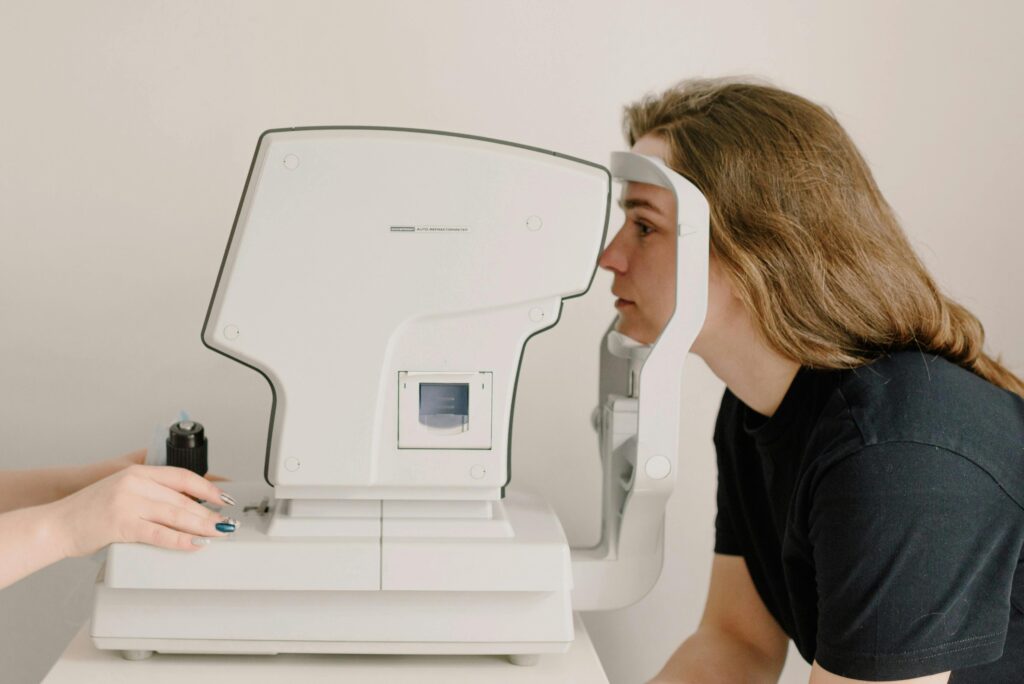

With advancements in surgical techniques, the outlook for individuals with macular holes has greatly improved. Most patients experience stabilization or improvement in their vision post-surgery, though the extent of recovery can vary. Regular eye exams and timely treatment are essential to preserve vision in cases of macular holes.
At Retina Consultants of New Mexico, we are dedicated to providing expert care for patients with macular holes. We utilize the latest diagnostic and surgical techniques to ensure the best outcomes for your vision. Trust us to guide you through understanding, treating, and managing this condition to maintain your vision and quality of life. We provide macular hole treatment in Albuquerque.
A macular hole does not change the appearance of the eye itself. Instead, it affects central vision, causing blurring, distortion, or a dark or empty spot in the middle of what a person is looking at. Side, or peripheral, vision is generally not affected. Symptoms can develop gradually or become noticeable more suddenly, depending on the stage of the hole.
Macular holes most often develop in adults over 60, as the vitreous gel inside the eye naturally shrinks and pulls away from the retina with age. High myopia, eye trauma, and retinal detachment can also contribute to the development of a macular hole. Anyone in these groups who notices a change in central vision should have it evaluated.
No, a macular hole is a break in the macular tissue, which is different from a macular pucker (also called an epiretinal membrane), where tissue forms on the surface of the macula, or macular degeneration, which involves deterioration of macular tissue over time. These are distinct conditions that can cause similar symptoms, which is why an eye exam is needed to identify the correct diagnosis.
A macular hole typically develops in one eye at a time, though a person who has had one in one eye has a higher chance of developing one in the other eye over time. Regular eye exams help monitor both eyes for early changes.
Recovery after macular hole in eye surgery varies from person to person and depends on the size of the hole and the specific procedure performed. Vision improvement is often gradual rather than immediate, and some patients may be asked to maintain a certain head position for a period after surgery to support healing. The surgical team provides specific recovery instructions based on the procedure planned.